
Blog
Parkinson’s Disease Treatment Video
Learn how comprehensive analysis and personalized treatment protocols at LifeWorks can potentially enhance your quality of life and delay the deterioration associated with Parkinson’s disease.
Take a proactive approach and explore alternative options for managing Parkinson’s disease.
If you would like to schedule an appointment, please call (727) 466-6789.

Hi, Dr. Minkoff, Lifeworks Wellness Center. I’m smiling, but I want to talk about something kinda serious.
What Parkinson’s Looks Like
You’ve probably seen a person with Parkinson’s. It often starts with their arm shaking when they’re not moving — hand, just like this, or like this. Then they have trouble walking. They might stand up, and in order to get themselves going, they have to lean forward to get moving. Sometimes, their whole face becomes frozen, looking like a mask.
Brain Area and Movement Coordination
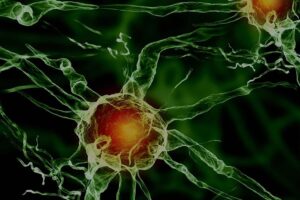
This is a degeneration of a small area in the brain that controls motor movements. In order to move my finger up, something has to let go of pulling it down and then pull it up. For smooth movement, it has to be coordinated very carefully so it’s fluid — whether snapping my fingers or making other motions.
These are very complicated actions. To get an artificial intelligence computer to mimic them would be extremely complex. We take this for granted, but there’s an area in the brain that mostly produces a neurotransmitter — a messenger molecule — called dopamine. These cells, located in the substantia nigra, can be attacked by the person’s own immune system, along with toxins such as lead, mercury, arsenic, or sometimes infections. As these cells die, they can’t produce dopamine, and without enough of it, movement becomes impaired.
Standard Medications and Their Limits
Medications given to people with Parkinson’s disease can add dopamine to the system, and these can be helpful at first. Unfortunately, within three to five years for most patients, the drugs stop working. The condition then deteriorates, making it very difficult to function. It’s often accompanied by depression, and over time it becomes a devastating, life-threatening, and life-ending condition.
Case Example
I had an engineer come in whose dopamine drugs were no longer working. His neurologist said, “I really can’t help you much more, because when the drugs stop working, we’re out of options.”
When I first saw him, his face was like a steel mask — no expression. I remember thinking he disliked me because of his cold stare. He was an engineer, and I love working with engineers because they are logical and understand how information fits together. I explained what we do to unwind Parkinson’s disease, and he followed along.
Treatment Approach
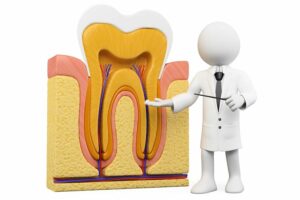
We began removing heavy metals, addressing viruses and parasites, and eliminating dental toxins from infected root canals. We sent him to a dentist to clean up his mouth.
Over four to five months, he began to improve. One day, during a visit, his wife and I both noticed he was smiling. I said to her, “Do you see this? He’s alive. He’s real. He’s like a human again.” She said, “I know — I’ve got my Jim back.”
He went from barely shuffling to walking two miles a day. Four years later, he’s still doing great. He continues his Parkinson’s medication, but cleaning up the rest of his system gave him a full life back. He was 62 when he came in; now he’s 66 or 67, still working, and still thriving.
Encouragement and Next Steps
This is a condition that can often be helped — we’ve seen many patients improve. Don’t wait until the drugs stop working. At the first sign, come in for a detailed analysis to identify what shouldn’t be in your body, what’s missing, and then go through appropriate therapies. There’s a very good chance the condition can improve so you can live your life and avoid ending up in a severely debilitated state with Parkinson’s.
Hope this helped.
Hope for Parkinson’s Disease – Restoring Function and Quality of Life
Join Dr. Minkoff from LifeWorks Wellness Center as he discusses Parkinson’s disease, a degenerative condition affecting motor movements.
Discover the underlying mechanism of Parkinson’s, involving the loss of dopamine-producing cells in a specific region of the brain.
Dr. Minkoff explains how the immune system, toxins, heavy metals, infections, and even dental issues can contribute to the progression of the disease.
He shares a remarkable success story of a patient who experienced significant improvement after addressing these underlying factors through targeted therapies.
If you would like to schedule an appointment, please call (727) 466-6789.
Neurological Disease Videos
Helpful Neurological Disorder Resources
- Neurological Disorder Treatment - a page dedicated to treating neurological disorders.
- Neurological Disorder Testimonials - patient success stories overcoming neurological disorders.